
How to read an EPC with a view to upgrading to a C rating
With the looming deadline for rental properties requiring an EPC rating of C, many landlords are updating their EPCs, and often have questions about how to improve their property.
The EPC itself is always the first place to start, but you have to know how to read it, what all the information actually means, and why some things are recommended and other aren’t.
In essence, if a factor of the building can be improved, then this will trigger a recommendation on the EPC.
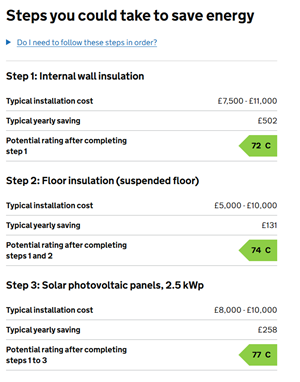
In the above example, Internal Wall Insulation, Floor Insulation, and Solar PV are the suggestions. EPCs take a “fabric first” approach, which means insulation will always come first, with other measures such as boiler upgrades and solar panels coming lower down the list. The increased ratings shown are cumulative, however you can make any upgrade you like, but the upgrades interact with each other so for example just making the solar upgrade to this property may or may not add the 3 points indicated, this is why we suggest modelling scenarios. As an aside, largfer PC arrays will add more points as well.
In this case the loft insulation is adequate, and improving it further will not increase the rating further, even if in reality this might make the house warmer. This is an important point, loft insulation is much easier and cheaper than wall insulation, so people ask if they can do that instead, but if the recommendation isn’t there, it won’t make any difference to the score.
People are often mislead by the descriptive section further up the EPC:
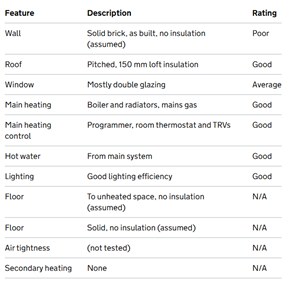
Thr boiler for example here is “good”, but not “excellent”, however replacing the boiler would not make any improvements because otherwise a recommendation would have been triggered.
There are a few occasions where improvements can be made but recommendations aren’t triggered, and your assessor will be able to point these out. One example is that secondary heaters are considered less efficient than the main system, so changing the way the property is heated can in some cases make an improvement, but a recommendation would not be triggered for this.
In summary, your plan for improvements should start with the improvement measures on the EPC itself, but ask your surveyor if there are any additional factors that might help. EPC suggestions aren’t always specific and, for example, different insulation thicknesses and products will have varying effects, which again is why we suggest a modelling scenario to assist with your planning.
If you need any help interpreting your EPC, don’t hesitate to get in touch